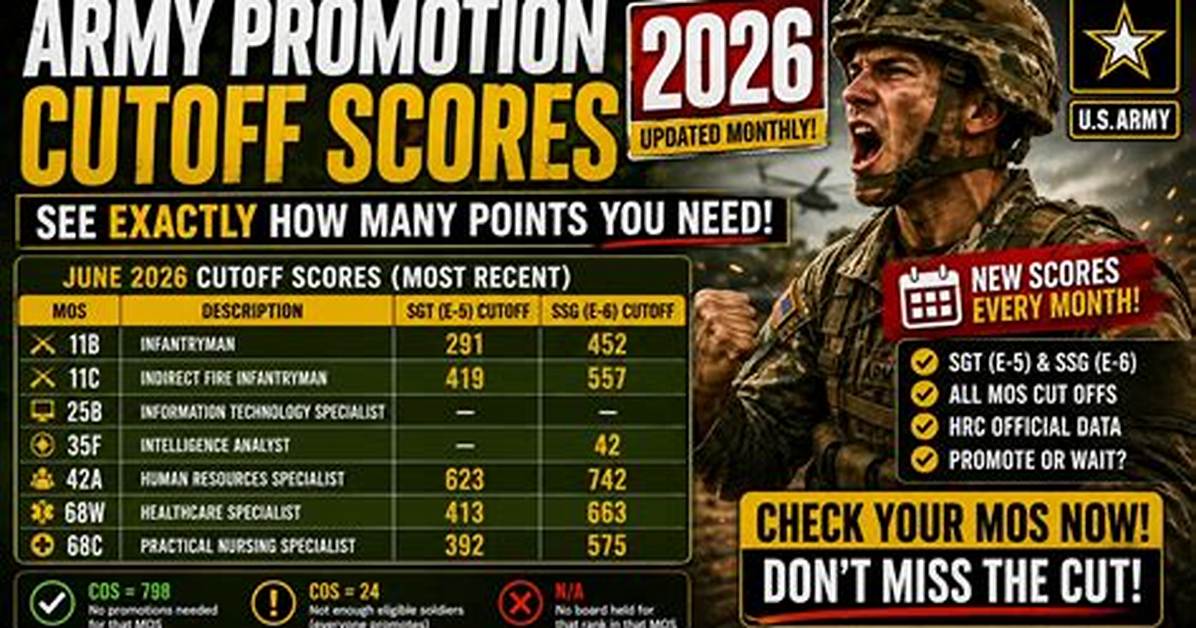
Army cutoff scores are vital metrics that determine a soldier's eligibility for promotions and career advancement within the United States Army. These scores reflect the soldier's performance on various assessments and play a crucial role in the selection process for higher ranks. In this article, we will delve into the intricacies of army cutoff scores, their significance, and the factors that influence these scores.
In the following sections, we will provide a detailed breakdown of army cutoff scores, including their calculation methods, historical trends, and the impact of various factors. Whether you are a soldier aspiring for promotion or simply curious about the military evaluation process, this guide will equip you with the knowledge you need.
What are Army Cutoff Scores?
Army cutoff scores are numerical values used to determine the eligibility of soldiers for promotion to the next rank. These scores are calculated based on various performance metrics, including:
- Army Physical Fitness Test (APFT) results
- Weapons qualification scores
- Time in service and time in grade
- Overall evaluations and recommendations from superiors
Cutoff scores vary by rank and Military Occupational Specialty (MOS), reflecting the unique demands and requirements of different roles within the Army.
Importance of Army Cutoff Scores
The significance of army cutoff scores cannot be overstated. These scores serve as a benchmark for performance evaluation, ensuring that only the most qualified soldiers advance in their military careers.
Key reasons why army cutoff scores are essential include:
- Establishing a standard for promotion eligibility
- Encouraging soldiers to maintain high performance levels
- Facilitating fair competition among peers
- Providing a transparent evaluation process

